
The Observer: The rise and rise of bubble tea
By Ruby Tandoh
There’s a bubble-tea store I go to in London – a small Taiwanese place that always has a queue out the door. The infusions tend towards grounded beiges and browns: bu zhi chun oolong tea; over-steeped Ceylon tea with milk and dark sugar syrup; an Earl Grey latte. If you get your tea with tapioca bubbles, you’ll find they’re made to a diameter of precisely 85mm, which is exactly the right width to slip through the straw. My order of choice is the milk tea with roasted buckwheat – a Ceylon blend that’s rounded out with soft, nutty undertones of soba. I get it with extra tapioca pearls, standard ice, standard sweetness.
Sometimes, instead of going for coffee, I take friends here. For the people who don’t know how much they’re going to love bubble tea, it can be a lot. Bubble tea isn’t one thing, it’s an umbrella term for a miscellany of Instagrammable drinks, many of which don’t have tea, milk, or even tapioca pearls. They can be fruit-based, or blended milk with chestnut purée, or high-concept versions made from scratch with oolong and hand-rolled pearls. You choose a base tea, add-ins, sugar and ice levels, milk types and whether or not to get a top of sweet-salty cheese cream – a thick, plush foam head, which gives black tea the visuals of a pint of Guinness. Depending on the drink, you can choose hot or cold. The permutations are seemingly endless – even the most seasoned off-menu Starbucks drink aficionados can get overwhelmed by up to a thousand possible routes through the menu.
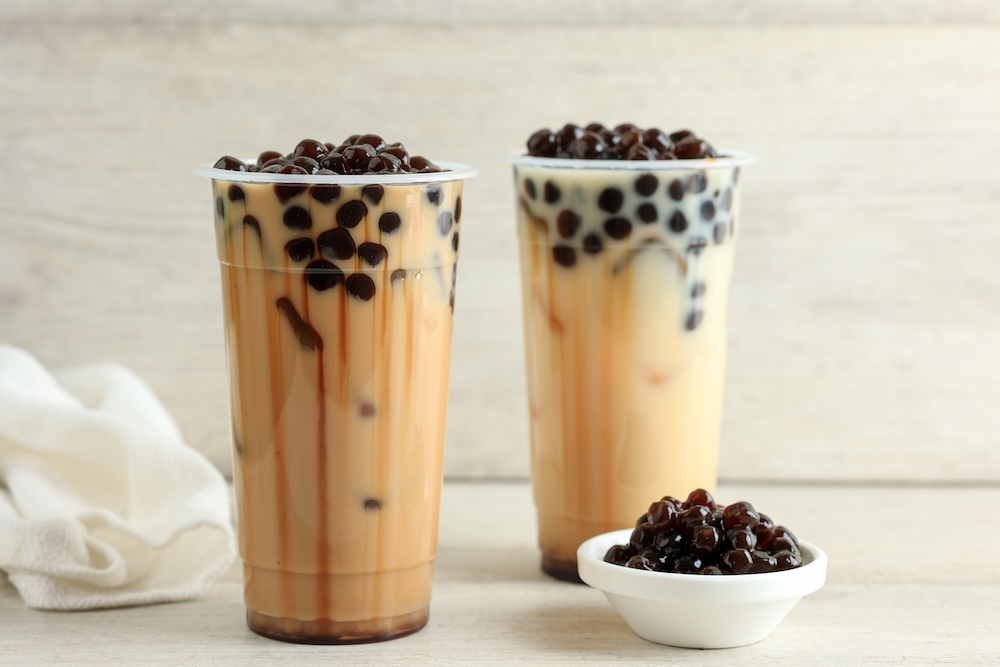
So, when they want to play it safe, I tell my friends to get the brown sugar boba milk tea – the archetypal iteration, the bubble-tea-emoji bubble tea. The milk tea is brewed to the colour of a manila envelope. It is served cold. Inside you will find the plump, brown-black tapioca pearls – also called bubbles, or boba – that have become the drink’s leitmotif.
To read the entire article: https://observer.co.uk/style/drink/article/the-rise-and-rise-of-bubble-tea
Photo credit: Ika Rahma/Shutterstock