
Oregon Public Broadcasting: Archaeologists and community historians on the trail of Chinese cowboys in Eastern Oregon
By Chelsea Rose (OPB) and Christie Goshe (OPB)
Recent investigations have linked Chinese Americans with more than 30 historic ranches in Eastern Oregon, including one south of Dayville in Grant County.
This story is a special collaboration with the Southern Oregon University Laboratory of Anthropology and the Oregon Historical Society, with support from Roundhouse Foundation.
Dale Hom looks out over the wild expanse surrounding Stewart Ranch in Grant County, one of dozens of historic ranches that have been linked with early Chinese immigrants in Eastern Oregon.
Hom, a retired forester and artist, has been part of a wider movement to add Chinese pioneers back into Western scenes like this one.
The site is now part of the Oregon Department of Fish and Wildlife’s (ODFW) Phillip W. Schneider Wildlife Area, accessible only by a rugged dirt road. This remote location has helped to preserve the early ranch and kept the modern world at bay, allowing researchers to search for evidence of the little known Chinese cowboys and ranch hands employed here in the early 20th century.
Over the course of a hot and dusty week in July 2025, Southern Oregon University archaeologists and project partners dug into the compacted soils of Stewart Ranch in search of tangible traces of men who’ve left only sparse paper trails in the documentary record.
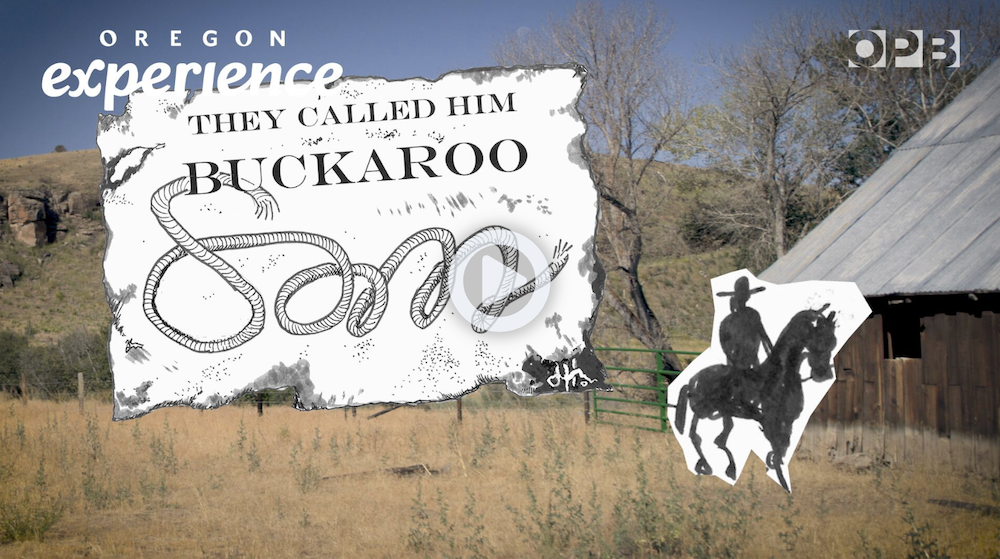
Men like Buckaroo Sam, Markee Tom, Fon Chung, Jim Lee, Tom Lim and Hi Moon. Working as cowboys, cooks, shepherds, foreman and even as ranchers themselves, these individuals have been hidden in plain sight on the Oregon frontier.
The myth of the American Cowboy
Scholars have worked hard to tease fact from fiction and update the archetypal American Cowboy. While Wild Bill Hickok, Wyatt Earp and other white cowboys may be real historical figures, historians have estimated that, in reality, one in four cowboys were Black.
To read the entire article: https://www.opb.org/article/2026/01/07/eastern-oregon-chinese-cowboys-trail/
Photo credit: Oregon Public Broadcasting