
Hyperallergic: Asian America’s Unofficial Photographer Laureate
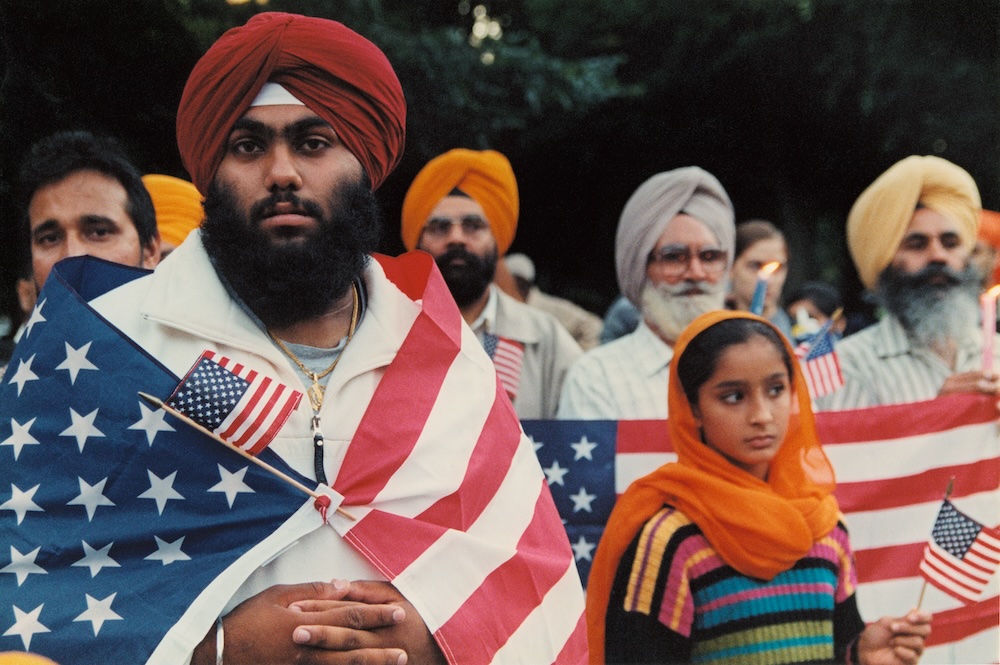
Reprinted with permission from Corky Lee’s Asian America: Fifty Years of Photographic Justice. Copyright © 2024 by the Estate of Corky Lee, Mae Ngai, and Chee Wang Ng.
By Lavinia Liang
Corky Lee was affectionately known as Asian America’s “unofficial photographer laureate.” Put together by his family and friends after his untimely death from COVID-19, Corky Lee’s Asian America: Fifty Years of Photographic Justice (2024) is, in essence, a retrospective, presenting his works in roughly chronological order, interspersed with essays from loved ones, colleagues, and even the subjects of his images.
Lee began photographing in the 1970s while working as a young community activist in New York City’s Chinatown. Unsurprisingly, the book is, in one dimension, an ode to the neighborhood, not as a tourist destination but as a lived-in community and hotbed of social justice movements. From the start, Lee’s motives were social. He took photos of everything and everyone, from everyday people dancing, lifting weights, or simply standing outside their favorite restaurants, to Asian American icons like Yuri Kochiyama and Yo-Yo Ma.
But what he loved photographing more than anything was social justice in action. He captured, among other moments, incidents of police brutality, the pain of the South Asian community post-9/11, and the rampant spread of hate crimes against Asians during COVID-19. The result in Corky Lee’s Asian America is a stunning glimpse into the fight for racial justice over the last half-century — one many Americans haven’t seen. Mainstream news sources did not capture Chinatown landlord-tenant disputes or protests for a neighborhood health center, as Lee did. It did not focus on Asian American opposition to the Vietnam War, as Lee did in a particularly arresting photo of activist Grace Lee Boggs holding a megaphone at a rally in front of the Washington Monument.
To read the entire article: https://hyperallergic.com/968419/asian-america-unofficial-photographer-laureate-corky-lee/