
Documented: Ava Chin’s “Mott Street” Tells Us Why History Shouldn’t Repeat Itself
By Fisayo Okare
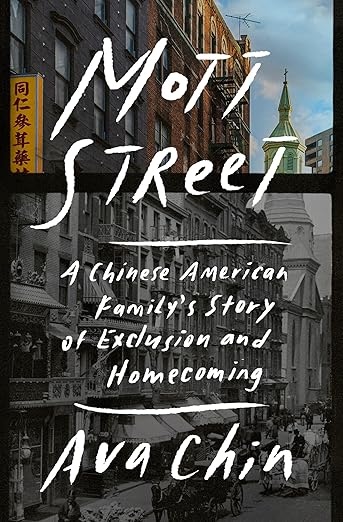
Chin’s award-winning book provides a detailed experience of America’s Chinese Exclusion Act of 1882, from her family’s perspective. It shows how iterations of exclusion through immigration laws keep coming up over and over again.
As part of Documented’s new “Our City” interview series, we are speaking to prominent and influential New Yorkers who have deep connections to New York’s immigrant communities, some of whom are immigrants themselves. We ask them about how they made New York City their own, where they feel most connected to in the city, current projects, and more.
Some of Ava Chin’s earliest memories are of Sunday mornings spent listening to her grandfather’s stories — not just about his ancestors or his childhood in China, but about his family’s largest contributions in American history.
The most captivating tales were of her grandfather’s grandfather, Yuan Son, who came to America as a teenager in the 1860s to work on the transcontinental railroad. When it was completed in 1869 after six years, the railroad was celebrated as an engineering feat in the 19th century, as it connected the American coasts for the first time. Of the 15,000 laborers hired to work on the railroad, 13,000 were Chinese.
On May 10, 1869, politicians and officials held an event called the Golden Spike Ceremony to commemorate the completion of the railroad. In the official photo from the ceremony, which marked the completion of the first transcontinental railroad, Chinese workers are notably absent, while politicians and officials take center stage.
Nevertheless, Chin’s grandfather always recounted the story of Yuan working on the railroad with great pride. What he always failed to mention, though, was that shortly after Yuan Son and his fellow workers completed the railroad in 1869, a financial crisis struck Europe and America. The Vienna stock market crashed in May 1873, followed by the collapse of a major New York bank, triggering widespread panic. The New York Stock Exchange shut down for the first time, marking the start of the worst depression in U.S. history.
To read the entire article: https://documentedny.com/2025/05/30/ava-chin-chinese-exclusion-act-shouldnt-repeat/