
Source
- *Featured
- –
- AAJA
- AALDEF
- ABC News
- AJSoCal
- APIAVote
- AsAmNews
- Asian American Federation
- Asian American Life
- Asian Americans Advancing Justice
- Associated Press
- CBS News
- Committee of 100
- Documented
- Hollywood Reporter
- Mochi Magazine
- NAAAP
- NBC News
- Northwest Asian Weekly
- NY Times
- PoliticsNY
- QNS
- SEARAC
- Smithsonian
- Stop AAPI Hate
- TAAF
- Think!Chinatown
- UCLA Asian American Studies Center
- Variety
By Emily Jia
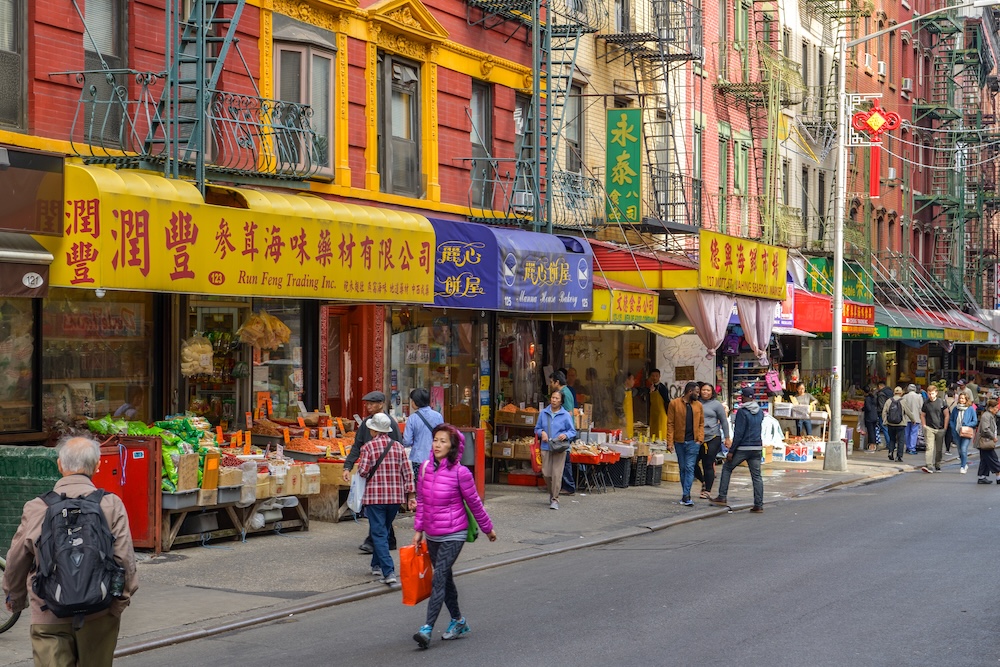
In New York City’s Chinatown, people are feeling the weight of new policy changes, like President Trump’s tariffs.
Lin, a shop owner in the heart of Chinatown, feels equipped to offer insight into the neighborhood’s changing landscape.
“We run a business on one hand, and live in New York on the other. All of these observations are grounded in our reality,” said Lin, a shop owner in the heart of Chinatown NYC.
Lin arrived in the U.S. in 1992, and began his dry goods business, located on 99 E Broadway in New York City, 10 years ago. Over the last decade, various economic policies and immigration laws have threatened his customer base, causing sales struggles and economic hardship for Lin’s family. He expresses his political disillusionment and desire to see real change.
Although Chinatown’s streets are now filled with emptiness, the shop itself immerses customers in a vibrant and abundant assortment of goods.
Upon entering the establishment, customers are engulfed by rows and rows of colorful dry goods, gathering a taste of China. The top three rows are stocked with boxes of tea and Chinese medicine, but just below is the heart of the store. The giant glass jars are filled with ingredients: ginger, dried roses, and a wide range of Chinese herbs that cannot be attained at American grocery stores, yet play key roles in Chinese cooking. My personal favorite section were the snack bins on the bottom level, stocked with osmanthus cake reminiscent of my mother’s hometown, Chengdu.
Through its selection, visitors can experience the culinary cultures that Lin brings from FuZhou province. While the majority of goods are sourced from mainland China, many are also imported from countries such as Mexico and Vietnam, creating a diverse collection infused with international flavors.
To read the entire article: https://asamnews.com/2025/09/14/chinatown-dry-goods-store-tariffs/
Photo credit: Michal Stipek/Shutterstock